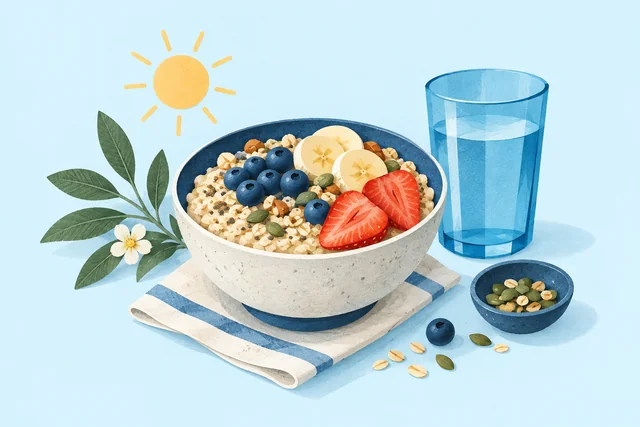
Check portions and compare ingredients fairly
A recipe’s serving count describes how its nutritional estimate was divided. It does not establish the right amount for every person. NIDDK explains the difference between a labeled serving and the portion someone actually eats. Needs vary, so use serving information as context rather than a rigid personal rule.
When comparing packaged ingredients, check the same serving size. A sauce with a smaller listed serving can appear lower in sodium simply because less of it was measured. If you use a different brand or change a quantity, the recipe’s nutrition estimate may also change.
- Vegetables or fruit: identify what is included and what might accompany the dish.
- Protein: consider options you enjoy, such as beans, tofu, eggs, fish, or poultry.
- Grains: see whether a whole-grain version suits the recipe and your preferences.
- Extras: account for sauces, oils, toppings, and drinks when considering the complete meal.
You do not need to calculate every nutrient to make a useful comparison. Start with the ingredient or practical constraint most relevant to you.